If you are planning mobile robots for your plant, you will soon hear about VDA 5050. It sounds like a detail for engineers. In fact, it is one of the most important business decisions in a robotics project, because it decides whether you can mix robot brands later or stay tied to one supplier for years.
The problem it solves
Traditionally, every maker of mobile robots shipped its own control software. Its robots worked well together, and with nobody else's. A plant that bought one brand for pallets and another for small totes ended up with two control systems, two screens and two fleets that could block each other at every crossing.
That situation is known as vendor lock-in. Once you have invested in one system, switching or adding a second brand becomes expensive and risky.
What VDA 5050 is
VDA 5050 is an open standard for communication between mobile robots and a central control system. It was developed by the German Association of the Automotive Industry (VDA) together with the mechanical engineering association VDMA, and it is free for anyone to use.
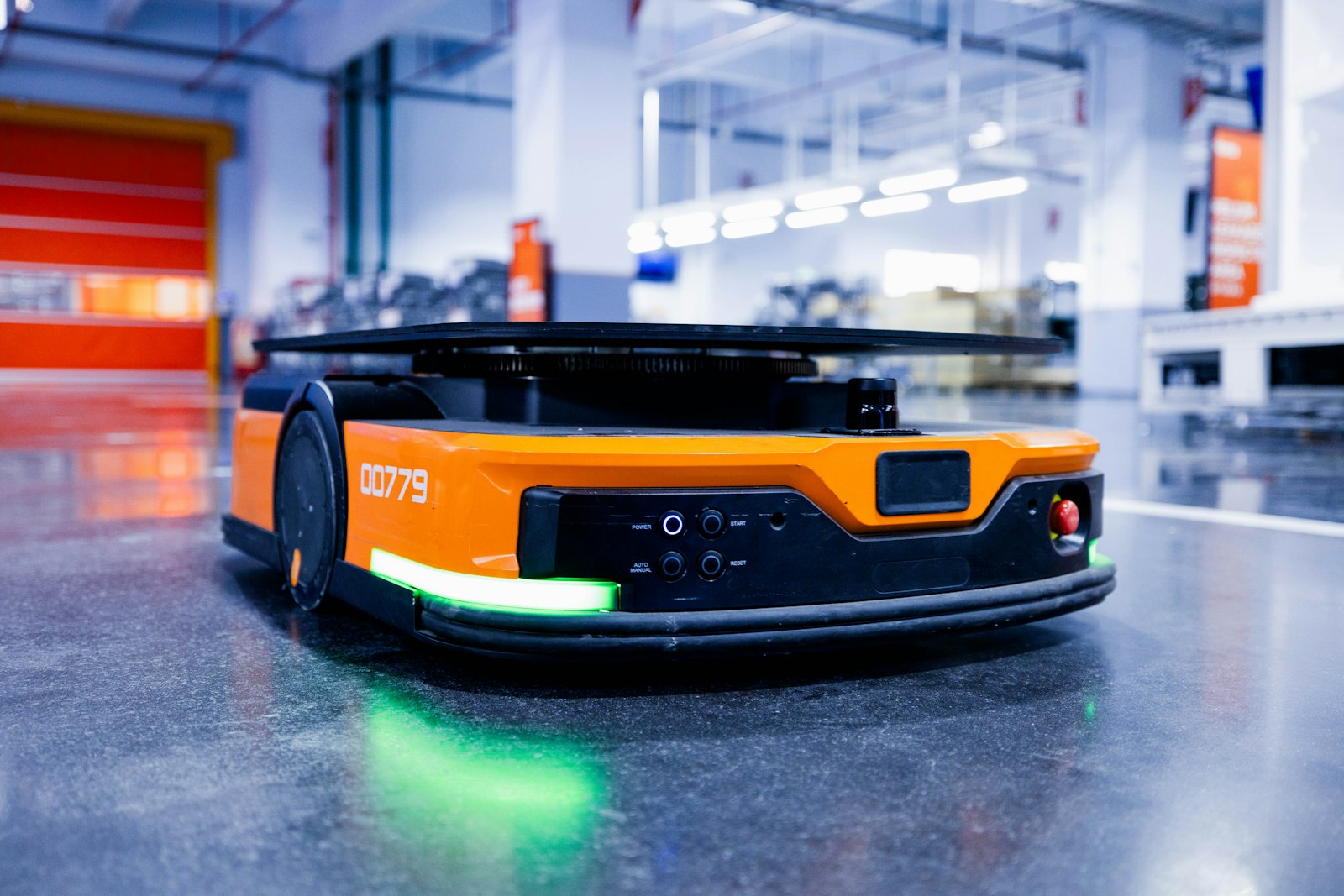
In simple terms, it is a shared language. The control system sends each robot an order: where to go, which route to take and what to do on the way, such as picking up or dropping off a load. The robot regularly reports back its state: where it is, what it is doing, its battery level and any errors. Because every robot uses the same language, one control system can manage robots from many makers at once.
What it means for your business
- Freedom to choose. You can buy the best robot for each job.
- One view of the floor. All robots appear in one plan, so traffic, priorities and charging are managed together.
- Easier growth. Adding robots, or a new brand, builds on what is already running.
- Lower long-term risk. If a supplier changes its prices or leaves the market, you can move on.
Where its limits are
VDA 5050 is important, and it helps to be clear about what it leaves to others:
- Safety stays with each robot. Every robot still needs its own safety functions, and the whole installation still needs a risk assessment.
- Support varies. Some makers implement the full standard, others only parts of it, so 'VDA 5050 compatible' can mean different things.
- It was designed for vehicles that move goods. Arms, humanoids and drones need additional ways to join the same plan.
- Maps and layouts still have to be set up carefully so that every robot understands the floor in the same way.
Questions to ask a robot supplier
- Which version of VDA 5050 do your robots support, and is it the full standard or a subset?
- With which control systems from other companies has it been tested in a real plant?
- Can your robots share traffic rules, such as crossings and one-way aisles, with other brands?
- What happens to a running order if the connection drops?
Our view
We believe the floor of the future will run robots from many makers, each chosen for what it does best. Open standards such as VDA 5050 are what make that possible. That is why Spine Fleet is built to work with any robot that speaks it, and why we encourage every customer to put it on their checklist before signing a contract.